
Capsula Lab / AI Agents
Introduce autonomous agents without losing control.
AI agents are not a feature you simply plug in. They are systems able to reason, use tools, call APIs and execute actions. Capsula designs them so they remain useful, supervised, measurable and compatible with real team workflows.

Autonomy must be controlled
- Actions authorized by role and context
- Usable traces to audit every decision
- Human validation at sensitive points
A useful AI agent is a supervised agent. Capsula builds agents able to use tools, call APIs and run workflows, always with guardrails, full logging and human validation on sensitive actions. Never full autonomy without control.
Agentic services
From AI idea to operational system.
Capsula works across the chain: identify the right use cases, choose the architecture, connect tools, reduce model-call costs, secure action rights and train the teams supervising the system.
Use case mapping
Identify processes where the agent brings real value: time, quality, cost, processing capacity or error reduction.
Multi-model systems
Model routing, RAG, tools, APIs, MCP/connectors, memory, permissions, storage and output validation.
Connection to operations
CRM, support, documents, internal databases, portals, emails, dashboards and existing business tools.
Logs, tests and evaluation
Measuring what the agent does, why it does it, how much it costs and when human takeover is needed.
Guardrails and compliance
AI Act, GDPR, OWASP LLM Top 10, access rights, logging, human validation and autonomy limits.
Augmented teams
Train users, define supervision roles and avoid uncontrolled shadow AI.
Sectors
Finance, education, science, health: the agent does not have the same role everywhere.
The right agent depends on business risk. In a regulated sector, the goal is not speed at any cost: actions must be traced, justified, limited and validated. Capsula builds autonomy levels adapted to context.

Contextual autonomy
An agent can suggest, prepare, execute or escalate depending on risk level.

Architecture before autonomy
An agent is only as good as the tools, data and guardrails it receives.
Architecture
A useful agent is a system, not a prompt.
An enterprise agent needs clear goals, the right data, the right tools, action validation and traceability. Without this architecture, autonomy becomes security and cost debt.
Task, scope, constraints, success criteria.
RAG, documents, CRM, history, business data.
APIs, emails, files, internal software, authorized actions.
Human validation, budget, permissions, refusal, escalation.
Logs, evals, cost per task, incidents, continuous improvement.
AI FinOps & security
API cost and risk become architecture topics.
Agents call models, tools and data. The more they act, the more cost and risk increase. Capsula structures trade-offs: which model for which task, when to cache, route, refuse or request validation.
FinOps AI
- Cost per task and workflow
- Model routing and fallback
- Cache, batch, limits and alerts
Agentic security
- Prompt injection and unreliable outputs
- Excessive or unauthorized actions
- Sensitive data and logging
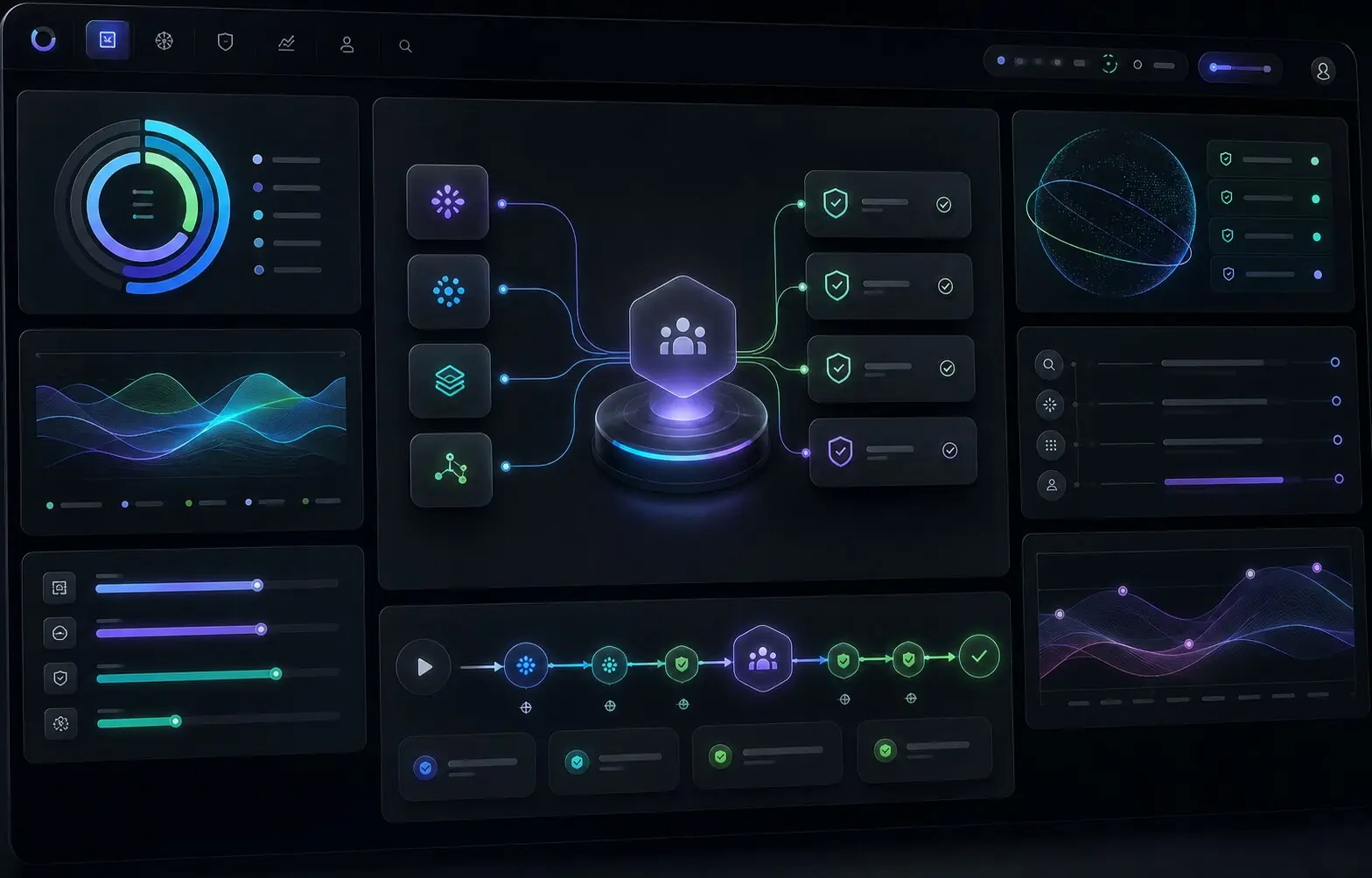
Control before scaling
Costs, permissions and incidents must be visible from the pilot.
Mastered ecosystems
Choose the right tools without locking into one vendor.
Capsula can architect solutions with major AI ecosystems and open-weight building blocks, depending on your cost, security, sovereignty, performance and integration constraints. The brands listed belong to their owners; their presence does not imply an official partnership.
Capsula method
Introduce agents in stages, not through hype.
Diagnose
Processes, data, tools, costs, risks, team maturity and existing dependencies.
Prototype a restricted flow
A measurable use case, closed scope and clear autonomy level.
Instrument
Logs, costs, evals, human validation, escalation thresholds, incident tracking.
Industrialize
Connectors, security, rights, documentation, training and maintenance plan.
Scale with control
Expansion by process, ROI comparison, lower cost per task and continuous governance.
Useful, controlled, measurable autonomy.
An AI agent must save time without creating invisible debt.
Capsula helps you choose the right first pilot, then build the architecture to move from test to real use.